One rising number · one decision
The crash-game shelf
Chicken road belongs to a family of games built on a single idea: something climbs, and you decide when to stop. The differences between them are small on screen and large in practice.
Strip the artwork off and these games are one shape: a number that rises, a button that stops it, and a draw that decides how far it could have gone. What separates them is whether you can see the price of the next step before you take it.
The family, in one table
| Game | What rises | Your decision | Price of the next step |
|---|---|---|---|
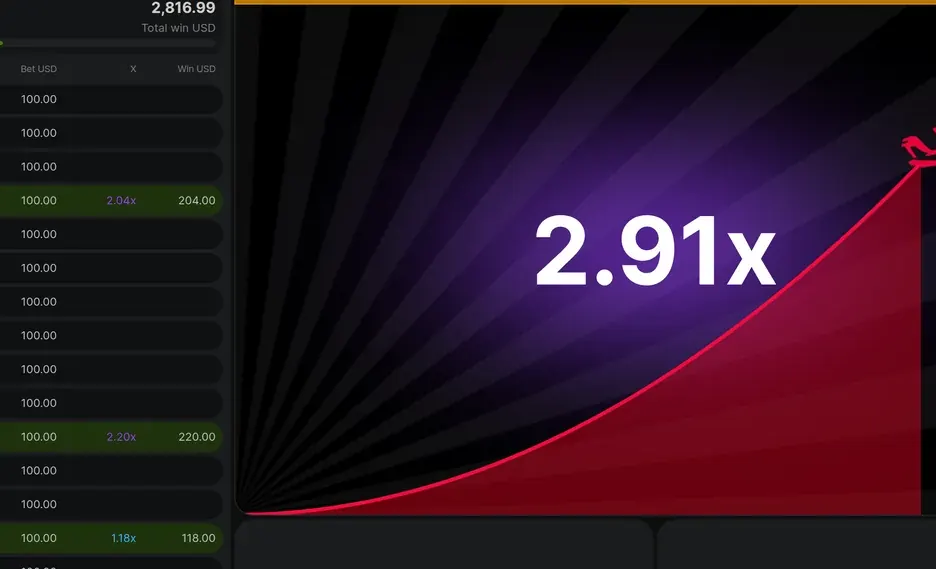
| Crash / Aviator | A continuous curve | When to cash out | Not shown — it is a clock |
| Chicken road | A lane ladder | Which rung to stop on | Printed in advance |
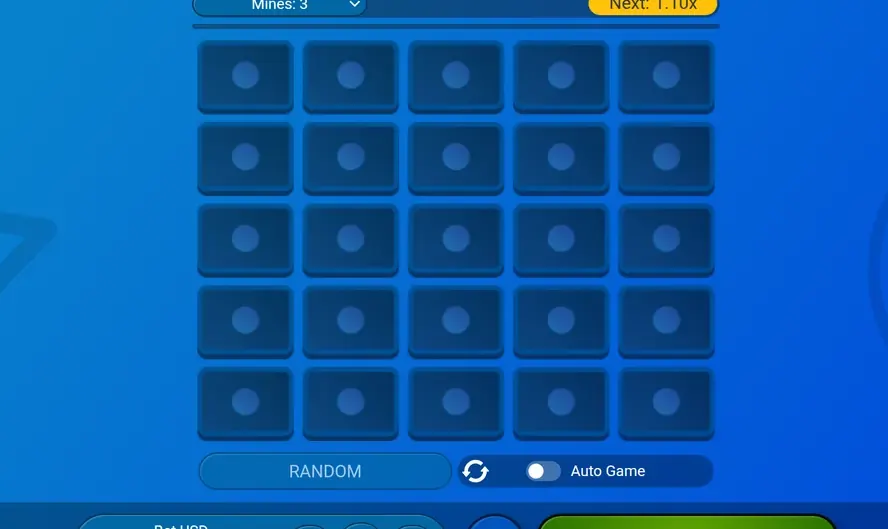
| Mines | Revealed safe tiles | How many tiles to open | Shown per tile |
| Dragon tower | Rows climbed | When to stop climbing | Printed per row |
| Plinko | Nothing — one drop | Risk setting, before the drop | Fixed by the setting |
| Limbo | Nothing — one draw | Target multiplier, before the draw | Chosen by you |
The right-hand column is the one that matters. Crash asks you to act under time pressure with an unknown next value; chicken road hands you the entire price list and asks a single question. People who bounce off crash games and then like chicken road are usually reacting to exactly that.
Where chicken road sits
Against crash, chicken road trades urgency for arithmetic. Nothing moves until you press, which means there is no reflex component at all — and also no excuse: if you walked into the car's lane, you chose to.
Against mines, it is closely related. Both reveal safe steps one at a time, both print what the next step is worth, both settle at commit. The difference is shape: mines lets you choose how many mines are on the board, chicken road lets you choose how long the road is. See how the lanes work for what that choice does.
Against plinko and limbo, it is barely the same activity. Those resolve in one event with no decision inside the round; chicken road is a sequence of decisions and its whole interest lives there.
What is the same across all of them
- The round is settled when you commit. Every game in the table draws its outcome at the start. Watching, waiting, or timing changes nothing.
- The published return is a long-run average, not a description of an evening.
- Variance is the setting you actually control. Difficulty card, mine count, risk level, target multiplier — these move how your results are distributed, not how much the game keeps.
- No pattern carries between rounds. Each draw is independent, which is why every “hot table” story is a story about memory, not about the game.
Of the family, the one with a printed price on every step is chicken road — the crypto chicken road game guide reads its ladders rung by rung.
The one honest piece of advice
Pick the game whose decision you are comfortable making, then set the variance to match how many rounds you want your balance to last. That is the whole strategy surface in this family, and anything sold as more than that — a predictor, a signal group, a script — is selling a forecast of a number that was drawn before the sale.
If chicken road is the one that fits, the bonus buy and the differences in Chicken Road 2 are the two places where the arithmetic is worth a second read, and the crypto cashier page covers the part none of these games control.